 TechThrum
 TT TechThrum
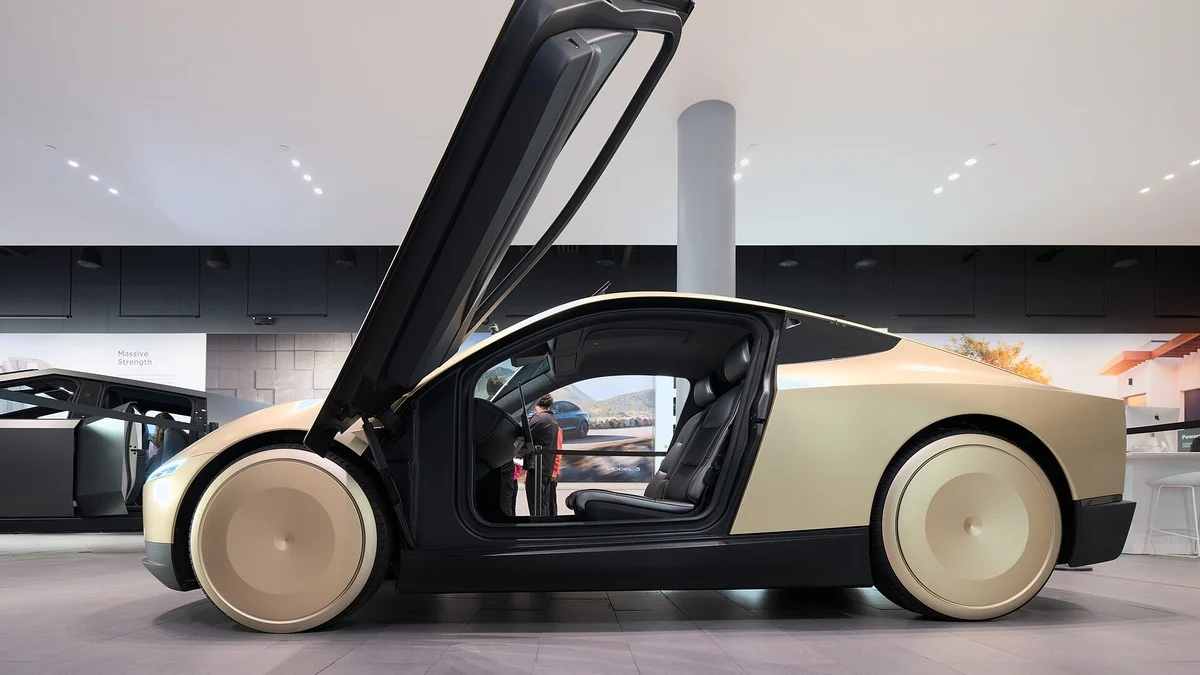
Tesla has started selling its Cybercab to private buyers, but the car comes with a catch that changes what ownership means. The two-seat robotaxi costs $29,990 before taxes, yet it will not move without a $299 monthly subscription. The offer is invitation only for now, with the first deliveries set for December in Austin, Texas.
Tesla announced the invitations on Friday through its Robotaxi account on X, as reported by TechCrunch. Selected customers can place an order with a $1,000 deposit that cannot be refunded. The first month of the subscription is included, and after that the $299 charge keeps coming every month for as long as the owner wants to drive.
The subscription is not an optional extra. Tesla calls it the Autonomy Subscription, and the agreement states plainly that the Cybercab will not operate without one. It covers the self-driving software, connectivity, remote support and roadside help. Over five years, the monthly payments add up to more than $17,600, which is well over half the price of the car itself.
There is a second limit, and it may matter more. The Cybercab only drives inside the areas where Tesla runs its Robotaxi service, which today means eight cities in Texas and Florida. Those are Austin, Dallas, Houston, Fort Worth and San Antonio, plus Miami, Orlando and Tampa. Outside those zones, the car cannot drive itself anywhere.
Tesla says it can expand, shrink or move those zones at will. Independent checks have also found gaps between the advertised areas and the places where Tesla actually accepts trips. One tracker who tested thousands of addresses found the real coverage was only 59 to 78 percent of the advertised zones in the cities he checked, and about 59 percent in Austin itself.
The car is also limited to personal use. Owners cannot put their Cybercab on Tesla’s own Robotaxi network or on other ride-hailing, delivery or rental platforms unless Tesla allows it in writing. That closes the door, for now, on the idea of buying one and letting it earn money while its owner is at work.
The car itself has no steering wheel and no pedals. US safety regulators have asked Tesla to show how a car without a brake pedal meets federal rules that were written for cars that have one. The touchscreen can move the car short distances at up to 2 mph, but only off public roads and only with a valid driver’s licence.
Even Elon Musk thinks the price is wrong. He said the $299 fee is too high and should match the cost of Full Self-Driving and connectivity on Tesla’s other cars, which he put at about $115 a month. He also said the Cybercab will be available nationwide as the company wins regulatory approval, though he gave no date for that.
Tesla is not the only company drawing lines around what automated systems can do. United Airlines has blocked AI agents from booking flights, citing security risks, while OpenAI’s ChatGPT Wallet lets AI agents shop and check out on a user’s behalf. The rules for machines acting for people are still being written, one company at a time.
The launch lands at a strange moment for Tesla’s autonomy plans. The company is asking buyers to trust a car with no controls, in a handful of cities, for a monthly fee its own chief executive says is too high. Whether enough people take that bet will say a lot about how ready the public is for cars that drive themselves.
For now, the Cybercab is less a car you own and more a service you rent. The $29,990 buys the hardware, but the driving itself is sold by the month, in the places Tesla chooses, on terms Tesla can change.