 TechThrum
 TT TechThrum
Anthropic has introduced Claude Ship, a new suite of AI agents designed to review code, resolve development issues and approve eligible changes, bringing more of the software development process under AI control.
Anthropic has launched Claude Ship, a new AI-powered development tool that aims to help software engineers move code from development to deployment faster by automating several stages of the code review process.
Announced on November 23, Claude Ship allows Claude to review pull requests, identify potential problems, work on fixes and approve changes that meet predefined team policies. The product is currently available in beta for customers on Claude Team and Enterprise plans using GitHub repositories.
The launch represents an expansion of Anthropic’s efforts to make Claude more than a coding assistant, positioning it as an agent capable of handling tasks that traditionally require multiple rounds of developer and reviewer involvement.
Three AI components power Claude Ship
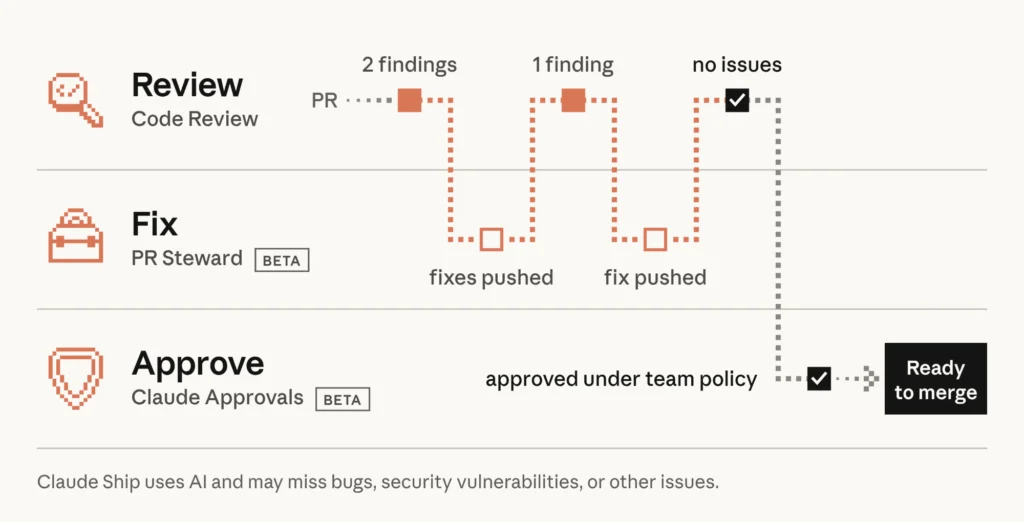
Claude Ship combines three components: Code Review, PR Steward and Claude Approvals.
Code Review, which is already generally available, examines proposed code changes from multiple perspectives, identifies potential issues and verifies its findings before posting feedback to a pull request. Developers can choose between Quick, Standard and Deep review levels depending on their needs.
PR Steward, now in beta, takes things further by helping developers address problems identified during the review process. It can respond to failed automated tests, merge conflicts and feedback from other reviewers. After making changes, it explains what it modified and how developers can reverse those changes if necessary.
The third component, Claude Approvals, introduces a more significant level of automation. It allows Claude to approve routine code changes when they satisfy rules established by a development team. Changes that require additional scrutiny can still be escalated to human reviewers.
Teams can define their approval requirements in a policy file within their repositories, giving them control over which changes Claude can approve independently.
Developers can activate it with a single command
Anthropic is also integrating Claude Ship into Claude Code through a new /ship command.
Developers can use the command when their changes are ready for submission. Claude can then push the code, open a pull request, review the changes and work through feedback or failed checks.
For engineering teams, administrators can enable the tools across selected repositories, configure review settings and establish spending limits. Teams can also begin by running Claude Approvals in an observe-only mode before allowing it to influence their actual approval process.
Human oversight remains important
Despite its expanded capabilities, Claude Ship does not eliminate the need for human supervision.
Anthropic recommends that teams carefully configure their approval policies and retain human sign-off for changes that require additional scrutiny. The company also acknowledges that AI-powered code reviews can miss bugs, security vulnerabilities and other issues.
The tools are designed to work alongside existing GitHub workflows and branch protection rules rather than replace them entirely.
Claude Ship is available for Claude Team and Enterprise customers working with GitHub repositories. Code Review is generally available, while PR Steward and Claude Approvals are currently in beta. Usage is token-based, meaning organisations may incur additional costs depending on their development activity and review settings.
What this means for software development
Claude Ship highlights a growing shift in AI-assisted software development: moving beyond generating code to managing what happens after the code has been written.
As AI coding agents produce more software, reviewing, testing and approving their output can become a bottleneck. Anthropic is attempting to address that challenge by giving Claude responsibility for more of the development workflow.
If the system proves reliable in larger engineering environments, it could reduce the time developers spend managing routine reviews and allow them to focus on more complex engineering decisions.